Where to Sell Sports Cards: Shows & More
Discover the best places to sell sports cards, including shows, shops, online apps, and auctions. Compare options for speed, value, and trust. Don't miss the Gulf South Card Show in November!
5/19/20266 min read
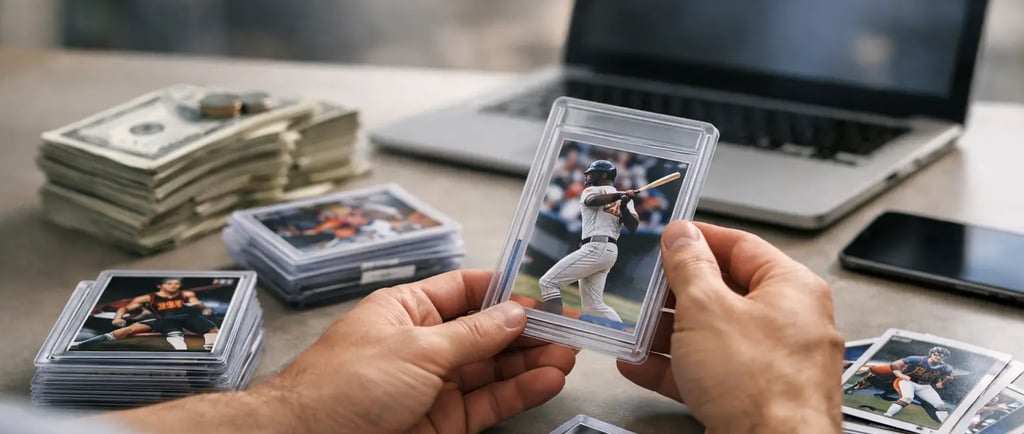
A hot rookie card can disappear in five minutes at the right table and sit untouched for weeks in the wrong online listing. That is the real question behind where to sell sports cards - not just who will buy, but who will buy at the price, pace, and risk level that actually works for you.
If you are selling a few extra cards from your collection, your best move may look very different from someone unloading graded slabs, moving wax, or turning inventory every weekend. Some sellers want top dollar. Some want fast cash. Some want to trade up. The smart play is matching the card to the marketplace.
Where to sell sports cards depends on what you have.
Not every sales channel values the same inventory the same way. A local card shop may pass on low-end base cards, but happily buy a clean vintage lot or a stack of regional stars. An online marketplace might be perfect for a numbered rookie auto, but a poor use of time for twenty-dollar singles after fees, shipping, and returns.
Start by sorting your cards into a few real-world categories: raw singles, graded cards, vintage, ultra-modern rookies, team lots, and bulk commons. That quick sort changes everything. A PSA 10 star rookie belongs in a different lane than a shoebox of mixed inserts.
Condition matters just as much as player and brand. Sellers often overestimate value because they remember what a card was once selling for during a peak run. Buyers are paying for the card in front of them, right now, in its current condition, with today’s market momentum.
The best places to sell sports cards- Card shows are hard to beat for serious sellers
If you want live offers, fast feedback, and the chance to negotiate face-to-face, card shows are still one of the strongest answers to where to sell sports cards. You are putting your inventory in front of motivated buyers, dealers, traders, and collectors who came ready to spend.
The biggest advantage is price discovery in real time. If three people stop at the same card, you instantly learn something about demand. If dealers keep making similar offers, you get a clean read on wholesale value. That is hard to replicate online, where pricing can look strong in screenshots but weak in actual completed sales.
Shows also give you flexibility. You can sell outright, trade into stronger inventory, bundle slower-moving cards, or test prices without committing to a listing. For Gulf South collectors, a strong regional event can be especially valuable because it concentrates buyers who know the local hobby scene and are more likely to appreciate LSU, Saints, Pelicans, and other cards with regional pull.
The trade-off is effort. You need to organize, price, and present your cards well. If you rent a table, you need enough inventory and energy to make the day count. But for sellers who want action, relationships, and momentum, the show floor is still one of the best arenas in the hobby.
Local card shops offer speed and simplicity
If your priority is quick cash with minimal hassle, a local card shop is a practical option. You can walk in, get an offer, and leave with money the same day. For many sellers, that convenience is worth taking less than full market value.
That lower offer is not a scam. It is the business model. Shops need margin for overhead, slower sell-through, and market swings. If a card is worth around $100 retail, do not be shocked if the buy offer is notably below that. The shop is taking on the risk and the waiting.
This route works best for solid mid-tier cards, vintage, sealed product, and collections that are clean enough to evaluate quickly. It is less ideal for low-end bulk and highly niche inventory unless the shop specializes in it.
Online marketplaces can bring the highest price
For valuable singles and graded cards, online marketplaces often produce the best headline number. You get national exposure, searchable listings, and access to collectors hunting very specific cards.
That reach matters when your buyer is not local. A serial-numbered patch auto of a rising prospect may only need one serious buyer, but that buyer could be three states away. Online platforms make that possible.
Still, the gross sale is not the same as your actual return. Fees, taxes, shipping supplies, insurance, payment holds, and potential returns can eat into the final number. Time matters too. Photographing, listing, answering messages, packing, and shipping is work. If you are moving one high-end slab, that may be worth it. If you are trying to unload fifty lower-end cards, maybe not.
Auction houses fit high-end and rare cards
If you have truly premium material - iconic vintage, scarce inserts, major grails, or elite memorabilia cards - auction houses can make sense. The right audience is already there, and competitive bidding can push exceptional pieces beyond fixed-price expectations.
This route is not for everything. Auction timelines are slower, fees can be meaningful, and not every card is special enough to benefit from that format. But if the card is rare, authenticated, and desirable across the broader hobby, a good auction can create real heat.
Social selling works best if you already have credibility
Facebook groups, hobby forums, live-selling apps, and direct social media sales can move cards quickly if buyers trust you. The upside is lower friction and often lower fees than major marketplaces. The downside is that reputation matters a lot.
If you are unknown, buyers may hesitate. If you do not ship quickly or communicate clearly, feedback spreads fast. Social selling can be excellent for established hobby voices, breakers, repeat sellers, and people active in regional communities. For a brand-new seller, it can be hit or miss.
How to choose where to sell sports cards
The right place depends on your goal.
If you want the highest possible price, sell individually where buyers can find exactly what they want. That usually means online or, for elite items, auction. If you want cash fast, local shops and dealer offers at shows are better. If you want flexibility and a chance to trade, shows stand out.
Volume changes the equation too. A single grail card deserves a more deliberate strategy than a closet full of team bags and storage boxes. Bulk lots usually sell at steep discounts, so sorting out anything with real value before selling the rest can make a major difference.
Timing also matters more than many sellers think. Selling a young star during a playoff run is different from selling in the offseason after an injury. Vintage tends to move on a steadier curve, while ultra-modern can swing hard on hype and headlines.
Common mistakes that cost sellers money
The first mistake is pricing off active listings instead of completed sales. Anybody can ask any number online. What matters is what buyers actually paid.
The second mistake is failing to clean and organize inventory. Cards in penny sleeves, top loaders, and clearly labeled boxes signal seriousness. Messy stacks invite lower offers because buyers assume more hidden problems.
The third mistake is trying to sell everything the same way. Your best vintage card should not be lumped into a mixed lot. Your low-end base should not take up the same selling effort as a sought-after auto. Segmenting inventory protects your time and your upside.
A fourth mistake is ignoring fees and shipping risk. A card sold online for more money can still leave you with less profit than a clean cash deal at a show table.
Why in-person selling still matters
The hobby is built on more than comps and scans. It is built on trust, eye appeal, conversation, and momentum. That is why live events still matter so much. Buyers can inspect corners, surfaces, centering, and autograph quality in person. Sellers can explain a card, bundle deals, and build repeat relationships.
That is also why strong regional events continue to earn loyalty. A packed room with sports cards, Pokémon, Magic, memorabilia, slabs, wax, and dealers under one roof creates options. You are not waiting on an algorithm to bless your listing. You are in the marketplace, right now, with buyers ready to make a move.
For Gulf Coast collectors, that kind of environment can be the difference between guessing and knowing. One well-run show can help you sell cards, find trade partners, meet dealers, and get a much clearer feel for what your collection is really worth.
If you are still deciding where to sell sports cards, start with your goal, not just your cards. Do you want speed, top dollar, less hassle, or stronger hobby connections? The best selling spot is the one that fits that answer - and gets your cards in front of the people most ready to buy