Who Buys Sports Cards Near Me?
You pull out an old shoebox, a graded rookie, or a stack of recent parallels and the first question hits fast: who buys sports cards near me? That question matters because where you sell can change everything - the offer, the speed, and whether you walk away feeling like you made a smart move or got rushed into a bad deal. If you're in Louisiana or anywhere across the Gulf South, the good news is simple: buyers are out there. The better news is that not all buyers are looking for the same cards, and not all selling environments give you the same leverage. If you want stronger offers, real conversations, and more than one option in the room, it helps to know exactly who buys what and where serious hobby activity actually happens.
Mitch
5/27/20265 min read
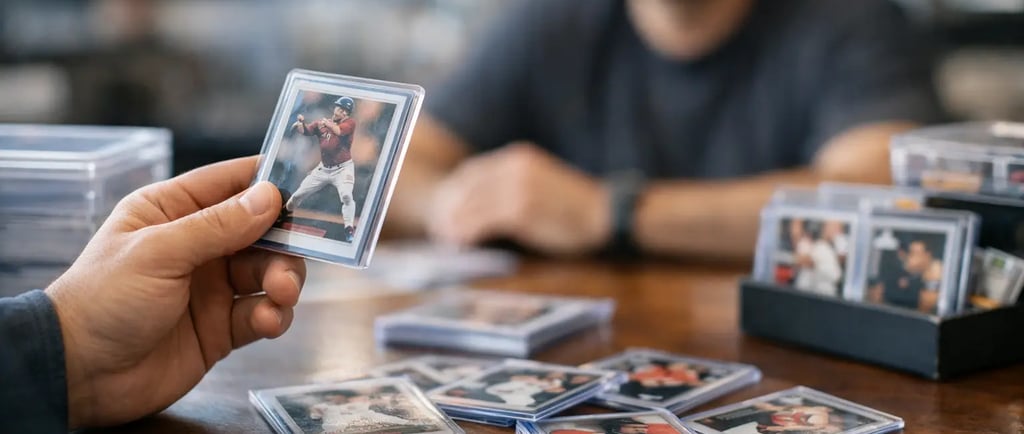
Who buys sports cards near me and what are they looking for?
Most local buyers fall into a few groups, and each one sees your collection through a different lens. Hobby shops usually buy with retail resale in mind. They may want popular stars, graded slabs, vintage hall of famers, local team favorites, and clean rookie cards that can move quickly in the case.
Independent dealers tend to be more flexible. Some chase ultra-modern singles, some want vintage lots, and some are hunting undervalued cards they can take to the next show. A dealer who loves football might pass on your baseball binder, while another buyer across the aisle lights up when they see it. That's why a single offer rarely tells the full story.
Collectors also buy locally, especially when they are building specific sets, player runs, team collections, or vintage categories. These buyers may pay stronger prices on the right item because they are not always calculating booth fees, overhead, and resale margins the same way a shop does.
Then there are card shows, which often bring all of those buyers into one place. That matters. A concentrated room changes the selling dynamic because you are no longer asking one person to define your card's value. You're stepping into a live marketplace where demand becomes visible.
The best local places to sell sports cards
If you're searching for who buys sports cards near me, start with the places where hobby traffic is real, not random. Pawn shops and general resale stores may buy cards occasionally, but they are usually not your strongest option unless you need immediate cash and don't mind a lower number. They often lack category depth, especially with modern parallels, grading premiums, and set-specific demand.
Local card shops are a better first stop. A real hobby shop understands condition, grading companies, print runs, rookie markets, and player movement. That doesn't guarantee the highest offer, but it does give you a buyer who knows what they're looking at.
Card shows are often the strongest in-person option because they create competition. You can walk one table, get a read, then move to the next. One dealer may be cold on your inventory while another is actively buying exactly what you brought. If you have a mix of sports cards, Pokémon, Magic, autographs, wax, or coins, a show environment gets even better because multiple categories are represented at once.
For many sellers, that variety is the difference between carrying boxes back to the car and making real progress in one afternoon.
Why live shows usually create better selling opportunities
There is a reason experienced sellers like busy regional shows. You get speed, market feedback, and options in the same room. Instead of waiting on online messages, dealing with shipping risk, or guessing whether your price is too high, you can put cards in front of active buyers face to face.
That face-to-face piece still matters in this hobby. Buyers can review condition on the spot. You can explain where a collection came from. You can decide whether to move a single grail, sell a full lot, or trade into something stronger. Deals happen faster when both sides can see the cards, talk through comps, and adjust in real time.
The other advantage is momentum. A good show floor creates energy. Dealers come ready to buy. Collectors come ready to hunt. If one person passes, the next buyer may be more aggressive because they know inventory moves quickly in a live room.
That is one reason a major regional event like Gulf South Card Show stands out for sellers across Louisiana and the Gulf Coast. It brings together the kind of broad hobby mix that makes local selling more efficient - sports cards, TCG, memorabilia, graded cards, and experienced buyers under one roof.
What buyers care about before they make an offer
Sellers often think the biggest factor is age. Sometimes it is, but not always. Buyers care more about demand, condition, authenticity, and liquidity. A recent rookie auto of the right player can attract more interest than a box of junk wax. A clean vintage star can outperform a stack of random older commons. A card in a respected slab may be easier to price and easier to move.
Condition changes everything. Soft corners, surface scratches, centering issues, and damaged edges can pull an offer down fast. That does not mean raw cards have no value. It means realistic presentation matters. If your card is not mint, don't sell it like it is.
Buyers also care about whether your cards fit what they already sell. A dealer with a case full of football might be highly motivated on football rookies and less interested in hockey. A vintage-focused buyer may want your pre-1980 stars but not your modern inserts. This is another reason broad marketplaces help. You want your cards in front of the right eyes.
How to walk in prepared and sell smarter
You do not need to overcomplicate it, but a little prep goes a long way. Separate your best cards from bulk. Know which cards are graded, which are autographed, and which are rookies or numbered parallels. If you have a large collection, organize it by sport, era, brand, or player.
It also helps to have a realistic sense of current value. Not every online asking price is a real market price. Buyers know the difference between listed prices and actual sold prices, and serious sellers should too. If you come in informed, the conversation gets cleaner and the deal usually gets better.
Be honest about your goal. Do you want top dollar on a few key cards? Do you want to move an entire collection today? Those are different missions. A full-lot offer will usually come with a margin for the buyer. A targeted sale of premium singles may bring stronger numbers but take more time.
Timing matters too. Hot players, playoff runs, draft buzz, Hall of Fame news, and product releases can all shift buyer interest. Sometimes waiting a few weeks helps. Sometimes taking a solid offer now is the smarter play. It depends on the card and the market.
Red flags to watch for when choosing a local buyer
Not every buyer deserves your cards. If someone rushes you, avoids clear pricing logic, dismisses condition questions, or pressures you to accept the first number on the table, slow down. Good buyers do not need to play games.
You should also be cautious if a buyer acts confident about categories they clearly do not know. Sports cards are not one giant lane. Vintage baseball, ultra-modern basketball, wax, low-end sets, and high-end slabs all move differently. A serious buyer knows that, and if they don't, your collection may be better off elsewhere.
The strongest selling environments feel competitive, transparent, and active. You want room to compare offers, ask questions, and decide without being boxed in.
When trading makes more sense than selling
Sometimes the answer to who buys sports cards near me is not really about selling at all. If a buyer has inventory you want, a trade can stretch value further than a cash deal. That is especially true if you're moving cards outside your lane and consolidating into bigger pieces, favorite players, or stronger long-term holds.
Shows are ideal for this because the options are visible. You can move across tables, compare inventory, and build a deal that fits your goals. For plenty of collectors, turning a scattered box of mid-tier cards into one card they actually want is a win.
The local advantage is still real
Online selling has its place, but local hobby spaces still offer something harder to duplicate: trust, speed, and real market interaction. You get to read the room, talk to buyers, compare offers, and make a call with more confidence. That is a big upgrade from shipping blind and hoping the transaction goes smoothly.
So if you're asking who buys sports cards near me, think bigger than one store and smarter than one offer. The best move is usually finding a live, credible, high-energy marketplace where buyers compete, collectors connect, and your cards have a real chance to meet the right person. Bring your best stuff, know your goals, and step into a room where the hobby is actually happening.